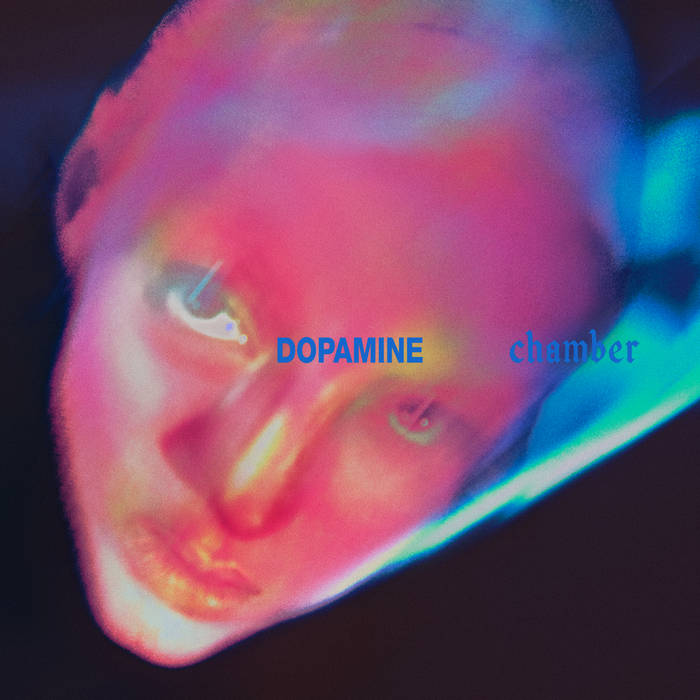
I find it fascinating to watch Fontaines D.C. grow with each album and keep surprising their listeners.
Back in 2019, I loved Dogrel and was waiting for another Boys in the Better Land. Instead, A Hero’s Death, released just a year later, gave me something much better: carefully arranged, layered guitar tracks like Televised Mind, which sounded incredible at OFF Festival. With Skinty Fia, I was hoping for even more guitars, but alongside the post-punk psychedelia came melodies that helped the band reach a wider audience. Romance firmly established them in the rock mainstream. But it also raised a question: where would they go after such a big commercial success?
To my surprise, on Dopamine Chamber, Fontaines D.C. aren’t trying to write more hits like In the Modern World or Favourite. Apart from Marianne and Where Is Gone?, a Nick Cave-style ballad recorded with Rosalía, few songs here sound like obvious singles. Instead, the band return to the approach of their earlier records, exploring new sounds and ways to express themselves. The results are very interesting.
It reminds me a little of Radiohead’s journey in the second half of the ’90s, when they turned to experimentation as a way of escaping their popularity. Dopamine Chamber doesn’t go as far as Kid A or Amnesiac, but you can clearly hear the band adding new elements to their sound. While working on the album, Carlos O’Connell expanded his synth setup, while fellow guitarist Conor Curley searched for sounds that wouldn’t bring their earlier records to mind.
Despite what the band had suggested beforehand, this is still very much a guitar album. Happy for You or Demolition could easily fit on Skinty Fia. Its atmosphere, though, is shaped by cold, industrial electronics. You can hear it in the mechanical pulse of opener Six Shot Morning, which brings to mind Nine Inch Nails and Joy Division’s She’s Lost Control. It runs through One Man, where synth sounds straight out of early Dead Can Dance records create a deeply moving atmosphere, and into closing track Intimate, the band’s most progressive song to date. My favourite, Tongue, opens like a lost track from Massive Attack’s Protection and has easily the most interesting arrangement on the record.
Lyrically, Grian Chatten touches on some of the themes Thom Yorke explored on OK Computer: the fear of a world driven by technology, where things happen faster than we can process them. Released almost thirty years later, Dopamine Chamber is a report from deep inside that digital trap. Through our little smartphone screens, we are encouraged to “give up responsibility and let someone else take care of our imagination”, as the band put it in the album announcement. They go on to say: “We’re thinking about where we escape to: hedonism, fantasy, cosmetic perfection, eternal youth and constantly refreshing the screen.”
The first single, Marianne, already delivers a powerful line: Understand this is your life / You can go on dreaming / You can go under the knife. There’s an unsettling promise of escape in those words: into dreams, other people’s ideas of happiness, or even changes to your own body. In Six Shot Morning, Silicon Valley and a private jet sit alongside the fantasy of living for a million years. It’s a vision of a world where money and technology are supposed to free us from every limit, including death. In One Man, meanwhile, Grian sings: Dopamine chamber just trying to kill the pain / You can’t escape the feeling once you’ve given it a name. Here, we see someone caught between the need to be part of the world and the temptation to shut it out.
Perhaps these reflections on our place in today’s world have something to do with the trip across Europe during which Chatten wrote the lyrics. He visited museums in Vienna and Venice, taking in European art and science. Some of the vocals were recorded during his stay in Palermo, where the album’s producer, James Ford, joined him. They recorded in a rented flat, using a makeshift vocal booth built from mattresses and pillows. Sounds from the surrounding area also made it onto the album: towards the end of One Man, you can hear children playing outside a nearby cathedral.
On Dopamine Chamber, it’s clear that the band aren’t trying to repeat the success of their previous album using the same formula. Their popularity has given them room to explore new, ambitious ideas, and Fontaines D.C. are making the most of it. The result may not be revolutionary or groundbreaking, but it certainly marks an important step in the band’s development.
Share your opinion
Loading comments...